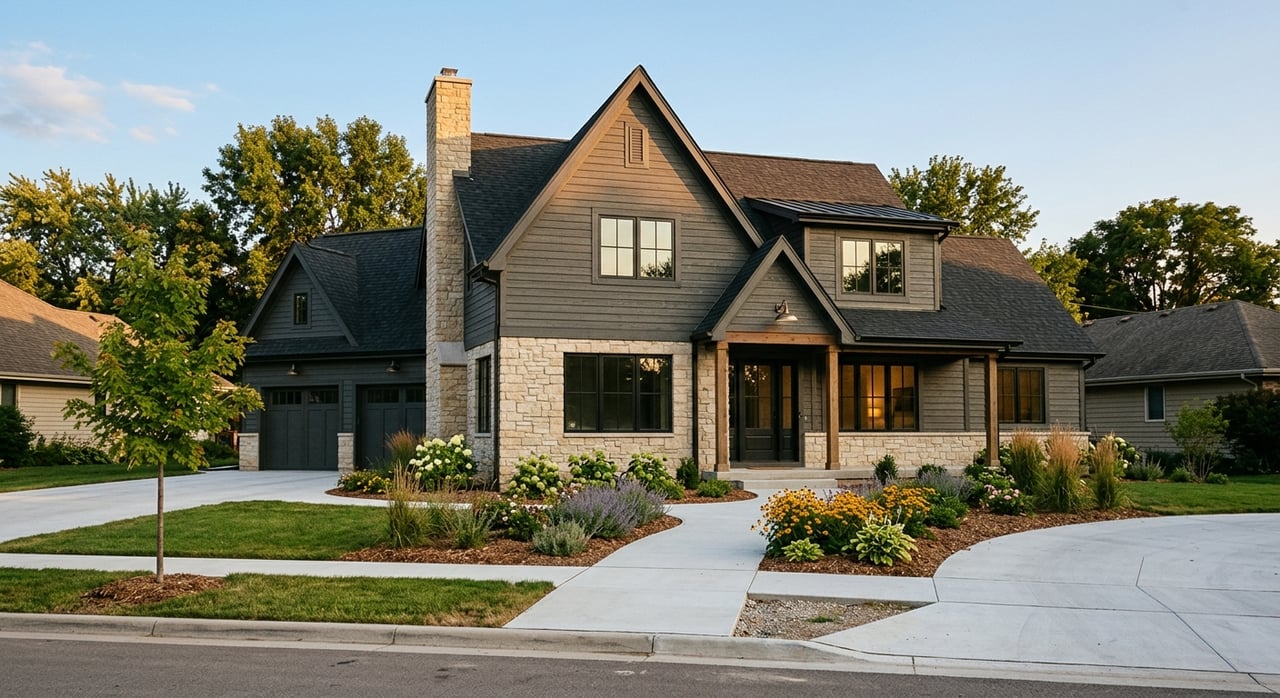
If you are thinking about building or buying new construction in Mills County, your first decision is not just floor plan or finishes. It is whether you want the speed of a move-in-ready home, the flexibility of a semi-custom build, or the control of a fully custom home, and whether your lot sits inside Malvern city limits or in unincorporated Mills County. That choice affects your timeline, permits, utilities, financing, and even your daily drive toward the Omaha metro. This guide will help you sort through the options so you can move forward with more clarity and less stress. Let’s dive in.
Why Mills County draws new-build buyers
Mills County offers a housing market that is mostly owner-occupied, with the U.S. Census reporting an 84.2% owner-occupied housing rate and a median owner-occupied home value of $228,700. The same Census data shows 6,158 housing units and 40 building permits in 2024, which points to a lower-volume market where new construction is often more lot-specific than large-subdivision driven.
For you as a buyer, that can be a plus. It often means more variety in lot types, a better chance of finding space for a one-off build, and more need to evaluate each property on its own merits.
If you work in or near Omaha or Council Bluffs, Mills County also has practical access to major travel routes. According to the Iowa DOT primary route descriptions, the county is connected by I-29, U.S. 34, and U.S. 275, making route planning an important part of any new-construction decision.
Compare spec, semi-custom, and custom
Before you choose a builder or a lot, it helps to understand what type of new construction actually fits your goals.
Spec homes offer the fastest path
A spec home is built without a buyer contract in place, according to NewHomeSource’s home-buying glossary. Some spec homes are already complete, while others may still allow limited finish selections.
If your top priority is moving sooner and making fewer decisions, a spec home may be the best fit. In many cases, you trade some personalization for a simpler process and a shorter timeline.
Semi-custom balances speed and flexibility
A semi-custom home starts with a builder’s existing plan, but gives you room to make meaningful changes. NewHomeSource notes that these changes can include structural modifications, not just cosmetic selections.
This option often works well if you want a home that feels more tailored without taking on every detail from scratch. It can be a good middle ground when you want control, but also want to keep the process manageable.
Custom gives you the most control
A custom home is built to your specifications rather than from a standard builder plan, based on the same NewHomeSource glossary. It usually involves the most decisions, the longest timeline, and the highest level of buyer involvement.
If you want a one-of-a-kind layout, specific site placement, or features tied to the lot itself, custom may be worth it. You just need to be comfortable with a more complex process.
Start with the lot location
In Mills County, the most important practical question is often where the lot sits from a jurisdiction standpoint. That determines which approvals you need and whether the property is more likely to use city utilities or private systems.
Inside Malvern city limits
If your lot is within Malvern, you should confirm requirements directly with city officials. The Mills County Building & Zoning page notes that residents inside city limits should verify requirements with the city, and Malvern’s zoning ordinance states that a building permit must be obtained before a structure is erected, reconstructed, or structurally altered.
The city’s posted materials also say construction cannot begin until the application is approved. Because Malvern warns that posted ordinances may not reflect the latest changes, it is smart to confirm current timing, fees, and paperwork with City Hall before you commit.
Malvern’s posted fee schedule lists new home or structure permits at $0.40 per square foot with a $50 minimum. The permit form also calls for a plan-view sketch, setback details, and for modular homes in R-1, State Building Code certification.
Outside city limits in unincorporated Mills County
If the parcel is outside city limits, the county checklist becomes especially important. The Mills County residential permit application requires engineered plans, a site plan, proof of an E-911 address, REScheck, a state electrical permit, and documentation for sanitary sewer or septic and for public water or a permitted well system.
If your lot is in a floodplain, the county also asks for a letter from an engineer or land surveyor stating the building will be at least 1 foot above the 100-year base flood elevation. That is the kind of issue that can affect cost, design, and even whether a specific lot still makes sense.
Plan for utilities and access early
Utilities can have a major effect on your budget and timeline, especially on rural or edge-of-town parcels.
For in-town projects, Malvern posts separate water-line and sewer-line permit forms, so your approvals may go beyond just zoning and building paperwork. That is one reason buyers should sort out utility responsibilities early rather than assume everything is handled under a single permit.
For rural lots, private systems may be part of the equation. The Iowa DNR private well program states that well construction permits are required for all new water wells and that permits are issued through county health departments in the Iowa Well Information System. The same DNR page explains that local boards of health regulate private sewage systems serving four homes or fewer or fewer than 15 people, while the DNR sets minimum standards.
Access matters too. If your site needs an entrance onto a state highway, the Iowa DOT electronic permitting system handles permits for interstate, U.S., and Iowa highways.
Think about commute practicality
A new build can look perfect on paper and still feel less practical once daily driving enters the picture. That is especially true if you want a rural-feel property while keeping ties to the Omaha metro.
Mills County’s major travel spine includes U.S. 34 and I-29, according to the Iowa DOT route information. For many buyers, the question is not just how far the lot is from town, but how easy it is to reach those routes during a normal workday.
The U.S. Census also reports a mean travel time to work of 25.6 minutes in Mills County. That does not tell you the commute for any specific property, but it does reinforce why route access should be part of your lot review from the start.
Understand financing for new construction
Financing a new build is different from financing an existing home, and it helps to know your options before you choose a builder or sign anything.
Construction loans work in stages
The Consumer Financial Protection Bureau explains that a construction loan is typically a short-term loan that covers building costs in stages. Repayment often begins 6 to 24 months after the loan is made, and the loan may either convert into a permanent mortgage or require a new loan application when construction ends.
That is why it is so important to ask lenders exactly how their structure works. A smooth build can still feel stressful if you are unclear on how and when the financing shifts.
Rural eligibility may open another path
For some buyers, a rural property may qualify for the USDA Section 502 Guaranteed Loan Program. USDA says eligible borrowers may be able to use 100% financing for a primary residence in an eligible rural area, subject to income and property rules.
USDA also advises buyers to compare approved lenders instead of assuming a builder’s preferred lender is the only option. That can be especially useful if you are weighing affordability alongside a build budget.
Preapproval still matters
The CFPB recommends that buyers shop multiple lenders, get preapproved, and use contingencies where appropriate. For new construction, the bureau also notes that builders may ask for an upfront deposit, so you should ask when that money can be returned if the deal changes.
That one question can save you real stress. Deposits, upgrades, and allowances all deserve clear answers before you move forward.
Budget beyond the build price
The build contract is only part of your total cost. You also need room in your budget for financing, inspections, utility work, and closing expenses.
The CFPB says closing costs often run about 2% to 5% of the purchase price. The bureau also notes that closing usually includes a home inspection, homeowner’s insurance, title insurance, and final document review.
Shortly before settlement, you will also complete the final walk-through. NewHomeSource describes this as the last inspection before closing, and notes that a certificate of occupancy is issued after the local jurisdiction completes inspections.
If the home will be your primary residence, Iowa also offers a homestead tax credit for owner-occupants. The state says the application is filed once with the city or county assessor and continues while you remain eligible.
A simple Mills County decision path
When you are weighing whether to build or buy new construction in Mills County, this simple sequence can help keep you grounded.
- Choose the lot and verify zoning, access, and utility options.
- Decide whether speed, flexibility, or full customization matters most.
- Get preapproved and compare financing structures.
- Confirm whether the property falls under city or county permitting.
- Build through staged inspections and lender draws.
- Complete the final walk-through and occupancy steps before closing or move-in.
This process can feel like a lot at first, but it gets easier when you tackle each step in order. The goal is not to rush. It is to make informed choices that fit your timeline, budget, and day-to-day lifestyle.
If you are exploring new construction in Malvern or elsewhere in Mills County, having local guidance can make the process much more manageable. From evaluating a lot’s practical potential to helping you think through resale, commute access, and the tradeoffs between spec, semi-custom, and custom homes, Lisa Zimmerman brings a hands-on, market-savvy approach to your next move.
FAQs
What is the difference between spec, semi-custom, and custom homes in Mills County?
- A spec home is usually the fastest option with limited personalization, a semi-custom home offers more modifications to an existing plan, and a custom home is designed to your specifications and typically takes the most time.
What permits are needed for new construction inside Malvern city limits?
- Malvern generally requires building permit approval before construction begins, and in-town projects may also involve separate water-line or sewer-line paperwork, so you should confirm current requirements directly with city officials.
What does Mills County require for a rural new-build permit?
- For unincorporated parcels, the county checklist includes engineered plans, a site plan, proof of an E-911 address, REScheck, a state electrical permit, and documentation for sewer or septic and water or a permitted well system.
Can a rural Mills County new build qualify for USDA financing?
- It may, if the property is in an eligible rural area and you meet USDA income and occupancy guidelines for the Section 502 Guaranteed Loan Program.
What should buyers review before choosing a lot in Mills County?
- You should review jurisdiction, zoning, access to major routes like U.S. 34 and I-29, utility availability, floodplain concerns, and whether the property will need well, septic, or highway access permits.