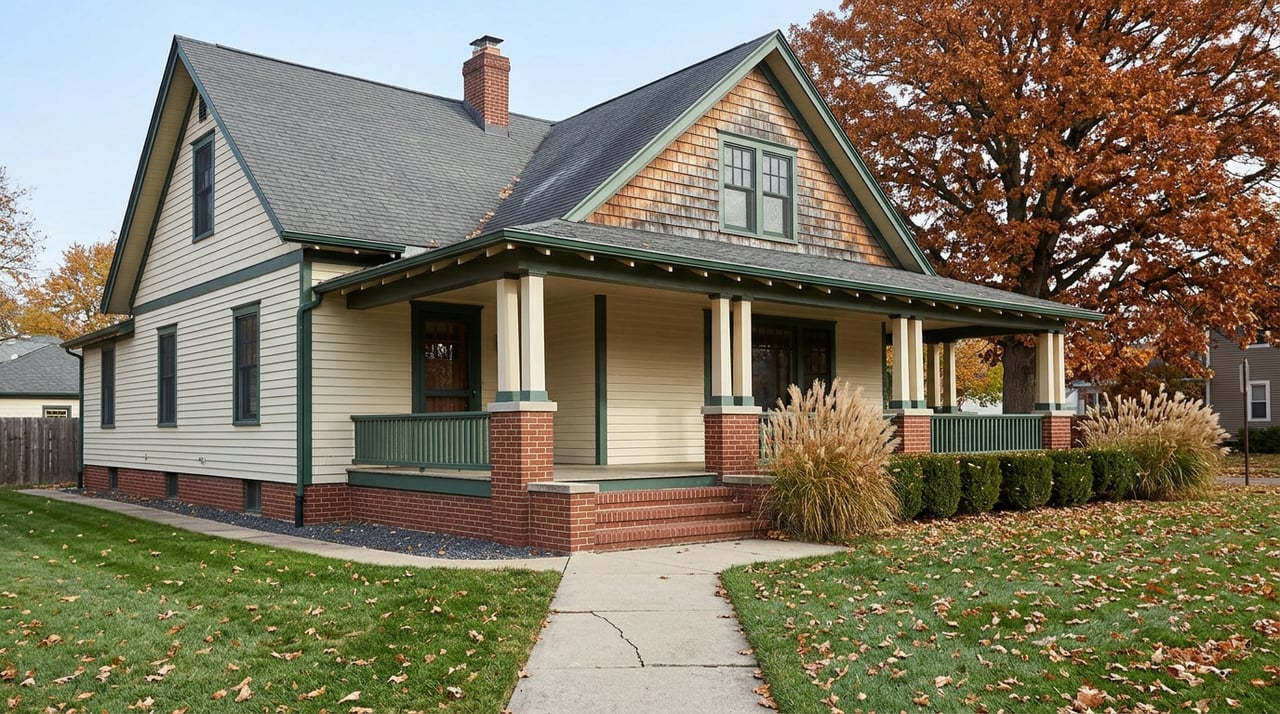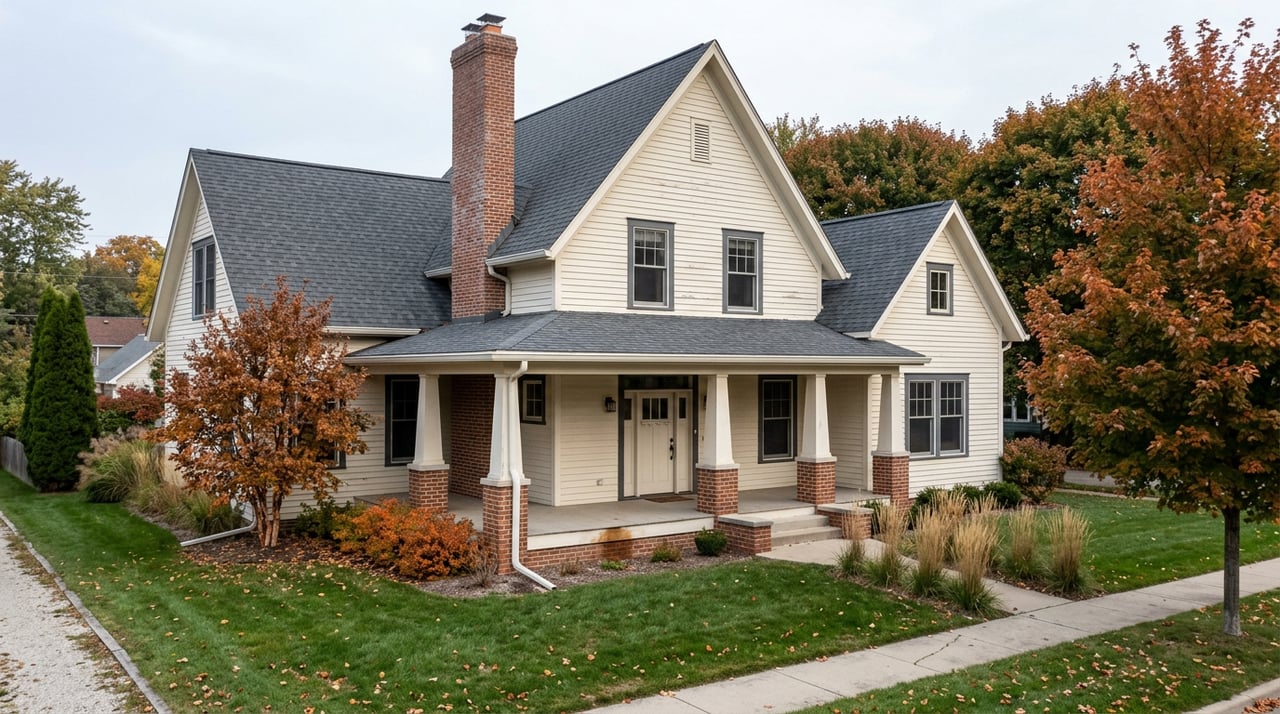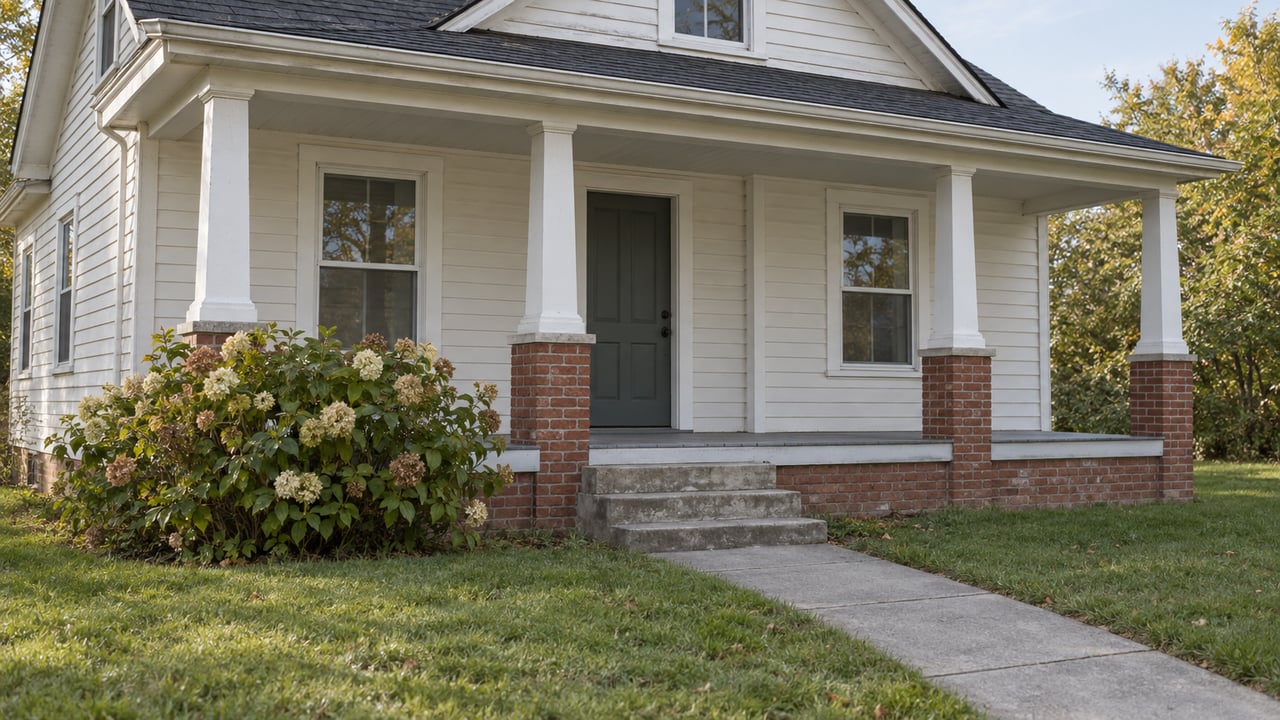
"From here on forward when inflation goes up, your rates come down." State Sen. Dan Dawson said that on the floor of the Iowa Senate this spring, defending a property tax overhaul he introduced for Iowa homeowners. Dawson represents Council Bluffs, the city that sits across the Missouri River from Omaha and gets described in real estate conversation as the more affordable half of the metro. He is also, without quite meaning to, the best evidence that description leaves something out.
The price gap between the two sides of the river is real. As of Zillow's most recent estimate, the average Omaha home value sits at $300,783, up 1.5% over the past year, while the average Council Bluffs home value comes in at $197,236, up 6.5% over the same period. That's over a hundred thousand dollars of difference on paper. What most cross-border buyers assume that gap measures is a straightforward discount for crossing the state line. It isn't. It's two states measuring "taxable value" with two different rulers, and Iowa just redrew its ruler this year.
Two Counties, Two Definitions of Assessed Value
In Douglas County, Nebraska, a home's assessed value is set at or near 100% of its market value every single year. Nebraska's constitution won't even let the state itself levy a property tax, so the entire burden falls on counties, cities, and school districts, all applying their own rates to that near-full-value base. When an Omaha home's market value climbs, its taxable value climbs right along with it, dollar for dollar, unless the owner successfully protests to the County Board of Equalization or, failing that, the Nebraska Tax Equalization and Review Commission.
Iowa runs a different machine. Every year, Iowa's Department of Revenue applies a statewide residential rollback, a percentage that determines how much of a home's assessed value is actually taxable. For the 2026 assessment year, that rollback sits at 47.4316%, and it's already scheduled to drop to 44.5345% for 2027. A $250,000 house in Council Bluffs isn't taxed as if it's worth $250,000. It's taxed as if it's worth less than half that, and the fraction keeps shrinking.
Council Bluffs' own city budget page shows what this does in practice. Using a hypothetical residential parcel with a 10% increase in assessed value between 2026 and 2027, the tax bill only moves from $839 to $856, an increase of about 2%, not 10%. That gap between how much a home's value rises and how much its tax bill rises is the rollback doing its job. Nebraska has no equivalent buffer built into its assessment formula. In Douglas County, a comparable 10% jump in market value would move the tax bill close to 10%, before any levy changes at all.
The Reform That Just Reset the Iowa Side
Dawson's bill didn't stop at the rollback. Iowa's legislature closed its 2026 session by passing Senate File 2472, signed by Gov. Kim Reynolds on May 18, 2026, which replaces the old homestead tax credit with a new homestead tax exemption. The old credit simply covered the taxes owed on $4,850 of a home's value, a fixed dollar amount that lost ground every year prices rose. The new exemption instead removes 10% of a home's taxable value from the tax roll altogether, with a floor of $5,500 and a ceiling of $20,000, a ceiling that will itself rise with inflation starting in 2027. The change is retroactive to assessment year 2026, though homeowners won't actually see it reflected until the tax bills due in September 2027 and March 2028.
The same legislation caps how quickly local governments can grow their tax revenue year over year, ties a chunk of the state's sales tax extension toward future property tax relief, directing up to 25% of that revenue toward property tax relief by fiscal year 2030-2031, and caps tax increment financing agreements at 23 years. None of that touches Nebraska. Douglas County residents watch their county board, their school board, and their city council each set levies independently, on a base that already reflects near-full market value, with no statewide mechanism working in the background to soften the year-to-year swing.
What the Same Kind of House Actually Owes
Before this year's changes took effect, SmartAsset's county-level analysis put Douglas County's effective property tax rate at 1.66%, close to double the national rate, with the single largest share of that money flowing to local school districts including Omaha Public Schools. The same analysis put Pottawattamie County's effective rate at 1.38%, working out to roughly $2,995 a year on the county's then-median home value of $217,800.
Those numbers alone would suggest Iowa is simply the cheaper option across the board, and on a pure percentage basis it often is. But the rate isn't the whole story. A lower rate applied against a rollback-reduced taxable base, layered under a levy the city itself sets each year based on its own budget needs, behaves differently than a higher rate applied against a value that already equals the market price. Two homes selling for the same dollar figure on either side of the river can land on tax bills that move in opposite directions the following year, one because the market pushed the assessed value up in lockstep, the other because the rollback absorbed most of that same increase before the levy ever touched it.
What This Means When You're Comparing an Actual House
If you're weighing a listing in Omaha against one in Council Bluffs, the sticker price and even the quoted tax rate won't tell you what you actually owe next year. Ask for the current tax bill on the specific parcel, not a percentage estimate applied to the sale price. Ask whether the seller has filed for the homestead exemption, since that filing runs on its own July 1 deadline through the Pottawattamie County Assessor's office, separate entirely from the April 30 deadline to appeal an assessed value you believe is wrong.
On the Nebraska side, the clock runs differently and the stakes for missing it are steeper. Douglas County's property tax bills are due by December 31, with the first half becoming late on April 1 and the second half on August 1. Miss those dates and Nebraska law requires 14% annual interest on the overdue balance, a rate that makes the state's collection posture considerably firmer than its comparatively lower headline home prices might suggest.
None of this makes either side of the metro the better buy in any absolute sense. Omaha's market moves fast, with homes over the three months ending June 2026 selling in around 14 days on average and drawing roughly two offers apiece. Council Bluffs offers a lower entry price and, after this year's reform, a homestead benefit that grows rather than staying fixed. What it means is that the number on the listing page is only half the comparison. The other half lives in each county assessor's formula, and this year those formulas moved further apart, not closer together.
Frequently Asked Questions
Does Iowa's new homestead exemption help someone closing on a Council Bluffs home in 2026? Not immediately. The exemption is retroactive to the 2026 assessment year, but it doesn't reduce an actual tax bill until the payments due in September 2027 and March 2028. A buyer closing this year should still plan around the current levy and rollback figures for the coming eighteen months.
Is there a Nebraska version of Iowa's rollback? No. Douglas County assesses residential property at or near 100% of market value with no statewide discount applied before the levy is calculated. The main lever available to a Nebraska homeowner who thinks their assessment is too high is a formal protest through the County Board of Equalization, with an appeal to the state's Tax Equalization and Review Commission if that doesn't resolve it.
Why might a cheaper Council Bluffs home still carry a tax bill close to a pricier Omaha one? The rollback shrinks the taxable base, but the levy rate applied to that base is still set locally, by the city, county, and school district budgets each year. A home in a district with a higher combined levy can still land on a comparable bill to a nominally pricier Omaha home, even after the rollback discount is applied.
If you're weighing a move across the river, or trying to figure out what a specific address actually costs to own rather than just to buy, that's the kind of comparison worth walking through before you write an offer. Lisa Pringle has spent years working both sides of this exact line. Let's connect.